Thursday, November 25, 2010

'Tis the Season - Part II


Whodunit? That's the question on everyone's mind. Of course, motive and method are important, but only insofar as they are necessary to solve the puzzle. The classic whodunit should not be weighed down with psychological quirks and ramifications. As to method, we will leave the gory details to the television of the 21st century. If I had wanted to be an autopsy surgeon, I would be an autopsy surgeon.

The comedy-mystery film can be one of the most delightful ways to spend time, but the style is fraught with pitfalls. It takes the right touch from all involved to pull one off successfully. 1945s Lady on a Train is a comedy-mystery that works for me. It is based on a story by Leslie "The Saint" Charteris with a screenplay by Edmund Beloin who wrote everything from Bob Hope's Christmas classic The Lemon Drop Kid to episodes of television's Family Affair.

The movie was directed by Charles David, a career producer/production manager who has two directing credits to his name. The other is also based on a Charteris story, 1945s River Gang starring Universal's criminally under-valued Durbin back-up, Gloria Jean. Charles David married his leading lady, Deanna in 1950 and they remained so until his death in 1999.

Deanna Durbin
Lady...with a book...on a train

Deanna Durbin stars as Nikkie Collins, an heiress. She is not the madcap heiress of 30s comedies, but a determined young lady with an acute case of Nancy Drew Syndrome. On her way to NYC from San Francisco to spend Christmas with an aunt we never meet, Nikki looks up from her mystery novel and witnesses a murder through her train window. In the natural course of events desk sergeant William Frawley has no time for dizzy dames and suggests she consult the author of the fiction she's reading to help with the fiction she has brought to the authorities.

Nikki needs ploys-a-plenty to solve this case. She finds ways to ditch her "keeper", Haskell of the New York office, who proves totally inept in his assignment to keep her safe and secure. She convinces the befuddled and bemused mystery writer that he must help her. She convinces the heirs of the murder victim that she was the late millionaire's paramour.

Dan Duryea, Deanna Durbin, David Bruce

Suspects include disinherited nephews Ralph Bellamy and Dan Duryea, a proud sister, Elizabeth Patterson, a sinister underling, George Colouris, a mug, Allen Jenkins and a lawyer, Samuel S. Hinds. A gloomy mansion, a fancy nightclub and a deserted warehouse complete the atmosphere.

David Bruce, usually seen as the best friend gives an assured, appealing performance as the romantic lead in this picture. However, I'm one of those gals who has eyes for no one else when Dan Duryea is on the screen. Here Duryea is a wastrel nephew with an eye to increasing his fortune.

Deanna's lovely voice is showcased beautifully and naturally in this movie. She sings a tender Silent Night over the long-distance telephone to her father. When put on the spot by the baddies at the night club, she gives out with a cute-sexy rendition of Gimme a Little Kiss. Later in the club, Deanna's sultry Night and Day is a highlight.

Lady on a Train also abounds in Christmas trees. There is the tree the sergeant is delicately decorating at the police station. There is a big, friendly tree in the mystery author's spacious apartment. There is an elegant tree in Nikki's hotel suite. There is a partially decorated tree at the mansion. It is believed the deceased millionaire fell from a ladder while decorating his tree. We can also spot a tree behind a fellow who thinks he is shaving in the privacy of his own apartment but comes face to face with Nikki seeking the room she spotted from the train.


Lady on a Train offers a satisfying puzzle, moments of true suspense, and comedy that comes from its characters without becoming frantic. All that plus Dan Duryea and Christmas trees. Thank you, Santa.


Wednesday, November 17, 2010

'Tis the Season - Part I


I adore the Christmas season. I love the music, the baking, the decorations. The days grow short and the nights are long and dark with the murky atmosphere of mystery and film noir. Enough light seeps between the cracks in my Venetian blinds to remind me that life, filled with jolly revelers, is going on outside my door. I curl up with a steaming brew (dolloped with something special) and lose myself with the tough guys and gals of classic cinema.

First up, 1944s Christmas Holiday starring Deanna Durbin and Gene Kelly. A movie with that title and those stars leads the mind to a Lake Placid resort featuring a tap dance on skates to Jingle Bells and a heartwarming Ave Maria solo. No. The musical side of my soul must seek elsewhere for that sort of entertainment. A Somerset Maugham story was the basis for Herman Mankiewicz's screenplay, a story of deceit and obsession. Noir master Robert Siodmak directed and this places among his best in that time-honoured style, The Killers, Criss Cross, Phantom Lady, and Cry of the City.


Deanna Durbin and Gene Kelly 

Reliable "everyman" Dean Harens plays Lt. Mason, a young soldier about to be sent overseas. On the eve of what he thought was to be his wedding a "Dear John" letter spurs him to thoughts of revenge. A storm detours his plane to New Orleans where he is befriended by drunken (aren't they all?) newspaperman Simon Fenimore played by future director (Champagne for Caesar, TVs My Three Sons) Richard Whorf. Fenimore thinks the lieutenant needs to drown his sorrows and takes him to a dive run by Gladys George who introduces him to jaded gal singer Jackie Lamont played by Durbin.

Jackie has her own troubles. Let's start with the fact that her real name is Abigail and she's running from something, running from herself. She fell in love with a charmer by the name of Robert Manette played by Kelly. Manette, in turn, had his own issues with narcissism, gambling and mother. Mother is played by Gale Sondergaard so you know off the bat that something is off-kilter in the family tree.


Deanna Durbin with Dean Harens

The rain-soaked Christmas Eve and Christmas Day Lt. Mason spends with Abigail as she recounts life with a murderous hubby and imperious mother-in-law prove to be life-changing for the young man and intriguing storytelling for the viewer.

Gene Kelly channels his famous energy and charm into the wastrel Manette. His attraction to lonely Abigail is understandable. Deanna Durbin's trademark perkiness is nowhere in view as we see her tentatively reaching for happiness and shutting down when life slaps her in the face. Her perfunctory delivery of Frank Loesser's Spring Will Be a Little Late This Year when we first meet her in the nightclub shows us her weariness. The later rendition of Irving Berlin's Always is a heartfelt glimpse into her pining heart.

I am struck when watching Christmas Holiday how so many private things occur in such very public places. Abigail and Robert meet and fall in love in the upper gallery of a crowded concert hall. The final crash of the safe world Abigail thought she had found is in a courtroom filled with spectators. It is in church on Christmas Eve that Abigail finds the strength to start to break down. What private calamities and victories will be going on around us during this busy season?


Monday, November 8, 2010

J. Farrell MacDonald Movie Quotes

J. Farrell MacDonald
June 6, 1875 - August 2, 1952

Connecticut born J. Farrell MacDonald had a career or three in show business. He began as a minstrel performer and by the teens was directing for L. Frank Baum's Oz Film Manufacturing Co. and making a name for himself as a reliable character actor.

Working until the last few years of his life, MacDonald's face can be spotted in hundreds of movies as a cop, a doorman, a doctor - always in support, but always more than a "bit". Outstanding roles include Mike Costigan, one of John Ford's 3 Bad Men who break your heart in 1926. He's adorable as the photographer in F.W. Murnau's Sunrise. The sympathetic Windy in 1936's Show Boat or the junk man in 1946's A Tree Grows in Brooklyn become memorable in MacDonald's hands. In 1935's Our Little Girl when runaway Shirley Temple encounters a hobo, we know it will be alright when "Mr. Tramp" is played by J. Farrell MacDonald. He worked, and he worked with the best.

Movie fans all have our favourite moments from our years of watching classic movies. Maybe they're not always the ones that make the AFI lists, but nonetheless, they touch us. Three of my favourite movie quotes all came out of the mouth of J. Farrell MacDonald.


MacDonald made 25 pictures with John Ford starting in the silent era. What times they must have had! Number 1 on my JFM countdown is from Ford's first post-war film, My Darling Clementine. In speaking with other western fans I know that I'm not the only one who anticipates the small exchange between Henry Fonda's Wyatt Earp and MacDonald's barkeep.


Henry Fonda (Wyatt Earp), J. Farrell MacDonald (Mac)

Wyatt: Mac, have you ever been in love?
Mac: No. I've been a bartender all me life.

In his real life, MacDonald was married to actress Edith Bostwick (1882-1943). The couple appeared together in silent films and were the parents of a daughter, Lorna.


Preston Sturges was a writer/director who knew a good character actor/actress when he saw one, and he used them well. He used J. Farrell MacDonald in 8 of his pictures from The Miracle of Morgan's Creek to The Sin of Harold Diddleback.

In The Palm Beach Story, MacDonald is cast in the familiar guise of a cop. One look at that mug and you can feel his aching feet. It's no wonder Joel McCrea's character refers to him as "Mulligan". The response "The name happens to be O'Donnell if it's all the same to you" speaks volumes. His admonishment to bickering couple McCrea and Claudette Colbert is #2 on my countdown.


"Why don't you two learn to get along together? I had to."


It's the time of year when all thoughts turn to Frank Capra's first post-war project, It's a Wonderful Life. The trio of directors represented here all had their "stock companies" and that use of character greats maybe one of the factors that give their films such lasting qualities. MacDonald has three Capra pictures to his credit, including "Sourpuss" in Meet John Doe.

In It's a Wonderful Life the newly not born George Bailey is seeking evidence of his existence. He goes looking for his car, which was last seen smashed into a tree. The substantial citizen of Pottersville who owns the tree is rightly suspicious of the overwrought stranger in his yard. Sizing up the situation and taking a whiff of Stewart's breath JFM sums up the situation with #3 on my list.


"You must mean two other trees."

Gems all! What other J. Farrell MacDonald gems are waiting for me in classic movieland? Were they gems on paper or did they become so in the hands of the right actor? What do you think?


Wednesday, October 27, 2010

Choir Cookies


I have renamed my traditional chocolate chip cookies Choir Cookies in honour of their success at a recent fundraiser for said choir. When I touted them to potential customers as the "finest chocolate chip cookies in the land" one lady replied that she made the "finest chocolate chip cookies in the land". Instead of coming to blows we accepted our individual claim to the title and marveled that we should meet under such circumstances.

These cookies have a nice, soft cake-like texture.

3/4 C of softened butter
1/2 C sugar
3/4 C brown sugar (lightly measured, do not pack)
2 eggs
1-1/2 tsp vanilla extract
2-3/4 C flour
1-1/2 tsp baking soda
1/2 tsp salt
A cup or so of chocolate chips.
1/2 C of chopped pecans (optional) with milk chocolate chips
1/2 C of chopped walnuts (optional) with semi-sweet chips

Blend the butter and sugars
Add eggs and vanilla
Sift dry ingredients once and gradually blend into butter/sugar mixture
Add chocolate and nuts (if desired)

Roll about a tablespoons amount of cookie dough into a circle and pat flat (not too flat) on cookie sheet.

Bake in pre-heated 325 degree oven for 15 minutes. If your oven is anything like mine, you can lop a minute of each succeeding batch. Makes about 4 dozen delicious Choir Cookies. Enjoy!

For more treats on this blog check out:
Clare's Black & White Squares (December 14, 2009)
Robert Golden's (R.G. Armstrong) Chocolate Chip Cookies (April 7, 2009)

Upcoming for the Etobicoke Centennial Choir

The Big Sing, November 28th at Roy Thomson Hall
1000 voices of combined choirs accompanied by organ and brass ensemble

Our annual Sacred Traditions
An exciting evening of sacred music from the African, Jewish and Christian repertoire. Our special guests will be Nutifafa African Performance Ensemble and High Park Children's Choir. Traditional Christmas favourites and a carol sing as well!
Saturday, December 4 at 7:30
Humber Valley United Church
76 Anglesley Boulevard

Saturday, October 16, 2010

Remake Faux pas

Robert Preston as Professor Harold Hill
"I always think there's a band, kid."

Director Morton Da Costa's 1962 screen version of Meredith Willson's stunningly successful Broadway play The Music Man is one of the screen's most joyful musicals. Preserved for audiences is Robert Preston's Tony winning role of "Professor" Harold Hill. It's a colourful, brash homage to small towns, quirky characters and the love of music. It's a fun, touching and inspiring movie. I know that my many viewings as a youngster inspired my love of musical theatre.

Shirley Jones (Marian, the librarian) and Robert Preston
Love conquers all.

Above all it is a very funny movie, and that makes it a fun movie to watch. Paul Ford as Mayor Shinn gives a master class in the art of scene stealing. Hermione Gingold as Mrs. Shinn is every bit his equal. The script adapted by Marion Hargrove is sly without stooping to condescension. There are pleasures and delights around every corner of River City, Iowa circa 1912.


Kristen Chenowith and Matthew Broderick
The Music Man (TV, 2003)
The production was nominated for 5 technical Emmy awards.
It was filmed in Ontario, Canada.


In 2003 the Disney corporation retooled the classic as a "Music Man for the 21st Century". It didn't work. It should have worked. It's The Music Man. Two Broadway musical veterans led the cast, but Matthew Broderick was woefully lacklustre in the role of a vibrant con man and lovely, adorable Kristen Chenowith came off as a psycho spinster, perhaps compensating for Broderick's lack of spark. Mayor Shinn in the hands of adaptor Sally Robinson and the usually reliable Victor Garber was not in the least funny. He became a cardboard cutout villain.


"I've never been to the footbridge with a man in my life."


The worst offense was messing with my favourite line of the original. You will recall that Harold has lured Marian to the footbridge because he has "come up through the ranks in this skirmish and he's not resigning without his commission". Harold's compatriot Marcellus (Buddy Hackett) needs to get the romantic rogue's attention because "a crazy anvil salesman has been running all over town spilling the beans". Heeding Marcellus' beckon, Harold turns to Marian and explains he is "expecting a telegram from (pause, still playing the game, what would impress this gal?) Rudy Friml", implying a close relationship with the famous composer. It's subtle and funny. It always makes me smile. For some reason, in the TV movie Harold says he's expecting a telegram from "Hector Berlioz". Not even Hec Berlioz, but Hector Berlioz who passed away in 1869. Perhaps, unbeknownst to the audience, Marian was a devotee of spiritualism and would be duly impressed with Harold's influence. If so, it was too subtle for me.


Thursday, September 30, 2010

Favourite movies: True Grit (1969)


I have lost track of how many times I have seen True Grit. It is one of those films that is committed to memory. Marguerite Roberts' screenplay is filled with some of moviedom's most delicious dialogue as she drew heavily on Charles Portis' remarkably fine novel. The tone is one of dramatic authenticity with a dark sense of absurdity at situation and character, particularly Mattie's intractable worldview. It is the adventure of a lifetime.

John Wayne as Rooster Cogburn and Kim Darby as Mattie Ross

Rooster Cogburn: Why, by God, girl, that's a Colt's Dragoon! You're no bigger than a corn nubbin, what're you doing with all this pistol?
Mattie Ross: It belonged to my father, he carried it bravely in the war, and I intend to kill Tom Chaney with it if the law fails to do so.
Rooster Cogburn: Well, this'll sure get the job done if you can find a fence post to rest it on while you take aim.

I was 12 years old when I saw True Grit for the first time in 1969. A 12-year-old who had grown up in an era of television westerns and Audie Murphy features at our local theatre. I loved the drama, the action and the morality, sometimes ambiguous, in those stories. True Grit was the same, yet it was different. Western fans play the game of "measuring up". We would stand up to the rancher Ryker. We would not refuse Will Kane's request for help. We would know a skunk when we saw one.

In True Grit, it wasn't the tall man in the hat to whom I had to measure myself, it was a girl. It was 14 years old Mattie Ross seeking justice, seeking vengeance for the killing of her father. It was Mattie Ross standing up to a world of adults who wanted to brush her aside. It was Mattie dealing with her sorrow and pain, yet determined to have her voice heard. It was the world around her that would have to measure up to Mattie.

John Wayne, Kim Darby, Glen Campbell (La Boeuf)


The viewers go on a journey with the spunky girl as she deals with the frustrations of bureaucracy and the societal expectations of children. Mattie knows she is capable and she knows what she must do. Her journey leads her to Rooster Cogburn, a marshal of skill and dubious reputation. A Texas Ranger played by Glen Campbell becomes part of the team which is an uneasy alliance. Musician Campbell does well enough considering it is a tyro acting effort, but how I wish an experienced actor had been cast in the role. I always pictured Doug McClure.

True Grit is filled with interesting characters and interesting character actors which gives the film its depth. Jeff Corey (Little Big Man) is the murderer Tom Chaney. Hank Worden (The Searchers) is a sympathetic undertaker. Edith Atwater (The Body Snatcher) is a pretentious boarding house landlady. Alfred Ryder (T-Men) a bombastic defense attorney. Donald Woods (A Tale of Two Cities) is cast as the district attorney, but sadly only has one line in the film, and doesn't appear on screen.

Strother Martin, Kim Darby

Strother Martin (Cool Hand Luke) is Colonel Stonehill, a horse trader whose scenes with Kim Darby are one of the highlights of the movie.

Mattie Ross: Do you know a Marshal Rooster Cogburn?
Col. G. Stonehill: Most people around here have heard of Rooster Cogburn and some people live to regret it. I would not be surprised to learn that he's a relative of yours.

Jeremy Slate (The Sons of Katie Elder) and Dennis Hopper (Hoosiers) are two unfortunate criminals who cross paths with Rooster. Robert Duvall (The Godfather) is 'Lucky' Ned Pepper, as determined an outlaw as Rooster is a lawman. 
John Wayne, John Fiedler, H.W. Gim

John Fiedler (The Odd Couple) is Mattie's lawyer, J. Nobel Daggett.

Mattie Ross: They're in this story together. Now, I've got business across the river and if you interfere with me you may land up in court which you don't want to be. I've got a good lawyer in J. Noble Daggett.
Rooster Cogburn: [to LaBoeuf] Lawyer Daggett again.
LaBoeuf: She draws him like a gun.

John Doucette as the Sheriff

Mattie Ross: Who's the best marshal they have?
Sheriff: Bill Waters is the best tracker. The meanest one is Rooster Cogburn, a pitiless man, double tough, fear don't enter into his thinking. I'd have to say L.T. Quinn is the straightest, he brings his prisoners in alive.
Mattie Ross: Where would I find this Rooster?

Kim Darby as Mattie Ross

Rooster Cogburn is who Mattie feels will get the job done for her, but is she ready for the realities in store? How will the violence and hardships to come shape her character? Is it Mattie's determination and her vulnerabilities that will shape her destiny and her relationships? The novel presents the events as a memory, the story of an adventure. The movie's viewpoint is from the young girl that is Mattie Ross. We are swept up in her journey of discovery and her adventure with the force of nature that is Rooster Cogburn.

John Wayne as Rooster Cogburn

Rooster Cogburn: Baby sister, I was born game and I intend to go out that way.

John Wayne won an Oscar for True Grit. He had been nominated once before for Sands of Iwo Jima. Personally, if I were the Academy I would have given Duke nods for She Wore a Yellow Ribbon, The Searchers, and Island in the Sky, but I'm not the Academy.

It is impossible to say how many John Wayne movies I had seen to that point in my life. He was, to me, a true movie star and he epitomized the West, with a capital W, as it had grown in my imagination. Since that time, my main movie cowboys have become Randolph Scott and Glenn Ford, and John Wayne has become more and more, an actor who gives me great joy.

John Wayne carried a legacy of classic western portrayals of close to 40 years when he played the character of Rooster. The marshal was a man who hadn't just seen much, he had done much. However, his world was turning fast. His previous autonomous ways were becoming accountable to courts and now to a youngster, and not just any youngster, a young lady. A young lady with as keen a sense of self as his own. Their clash of wills would lead to understanding, respect, and affection that neither would experience again.

Henry Hathaway directed True Grit on location in Colorado instead of the novel's actual setting of Arkansas. Although that decision may annoy purists, it mattered little to a Nova Scotian girl who marveled only at the vast and magnificent scenery against which the tale was told. Award-winning cinematographer Lucien Ballard breathtakingly captured the magnificent scenery, making it another character in the story. Elmer Bernstein's score is one of his "rousing" variety and pushes all the right buttons.

When I think of great female performances of the 1960s it is not the Academy Award winners or the glamour queens of the era that come to mind. It is Kim Darby's valiant, heartbreaking and inspiring Mattie Ross.


Sunday, September 26, 2010

Introducing June and Art

Hello, friends. I want to direct your attention to a new blog on my "following" list. A special project from an IMDb Classic Film Board friend, lee-109 and sister, "The Story of June and Art" is a loving tribute to their parents and a time and place in their lives.

Enjoy!

PERRY MASON: THE CASE OF THE SAUSALITO SUNRISE

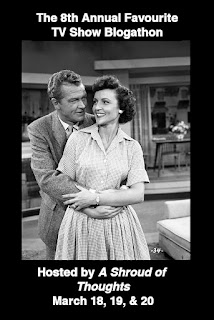
Terence Towles Canote at A Shroud of Thoughts is hosting The 8th Annual Favourite TV Show Episode Blogathon . The popular blogathon is runn...