Monday, January 10, 2022

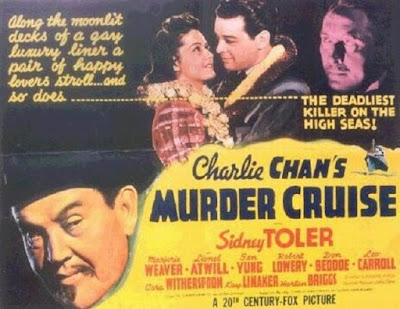
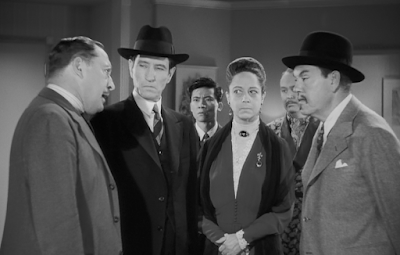
Sailing Away on Charlie Chan's Murder Cruise, 1940


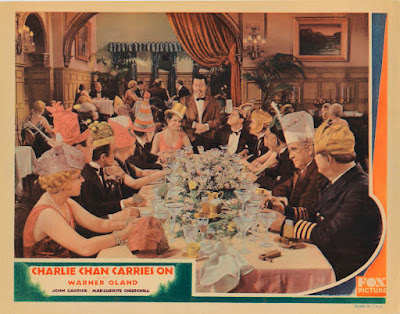
Charlie Chan Carries On, published in 1930 was the fifth of author Earl Derr Bigger's six Chan novels. Our premise finds Chan's friend and colleague Inspector Duff, from Behind That Curtain published 1928, pursuing a mysterious killer on board a luxury liner. Duff is wounded when the ship reaches Honolulu and Lt. Chan steps in as a matter of honour and friendship. 


Charlie Chan Carries On
was the basis of a 1931 film, sadly lost to us in a Fox Studio fire. The movie was Warner Oland's first foray as the Inspector and was directed by Hamilton MacFadden (The Black Camel).


The Spanish language version, Eran Trece produced in 1931 and featuring Manuel Arbo as Chan is available on the DVD collection, Volume 1. Fans will find it a treat to see the characters come to life.

Robertson White (Dick Tracy Meets Gruesome) and Lester Ziffren (Charlie Chan in Panama) reworked the story as Charlie Chan's Murder Cruise to suit the more contemporary sensibilities of the team of Sidney Toler and Sen Yung, who took over the popular series in 1938 with Charlie Chan in Honolulu. Eugene Forde directed the film, his only Toler outing after working on four of Warner Oland's Chan films.

Charlie Chan's Murder Cruise is a treat for fans of the series, fans of mysteries, and fans of the cast of great and familiar character actors featured in prominent roles.

Sen Yung, Layne Tom, Jr., C. Montague Shaw, Sidney Toler

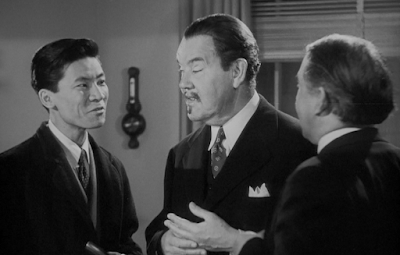
We begin with a little domestic problem for "Pop" Chan dealing with Sen Yung as Jimmy and Layne Tom, Jr. as Willie. Layne Tom, Jr. appeared in three of the Chan films and they gave him a different name in each one! 

The arrival of Inspector Duff of Scotland Yard is a "saved by the bell" moment for the Chan offspring. Jimmy, of course, will be back later to "help" with the case. Inspector Duff had been traveling incognito with a party on a cruise, in pursuit of a fiendish serial killer. The Inspector is murdered while at Honolulu Police Headquarters and Lt. Chan request to be assigned to carry on with the case is approved. 

Before the ship sets sail for its final destination of San Francisco there is another murder among the party. A retired manufacturer called Kenyon is strangled under mysterious circumstances and his lawyer nephew played by Robert Lowery comes under suspicion. You needn't worry about him as he is involved with Paula Drake played by Marjorie Weaver and the young romantic couple in Chan pictures may get in trouble, but they always get their happy ending.

Cora Witherspoon, Marjorie Weaver, Sidney Toler, Don Beddoe

Susie Watson: "What an advertisement for Honolulu. Scream once and Charlie Chan appears."

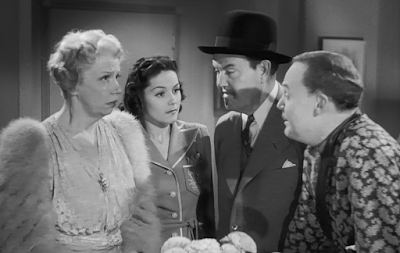
We meet more of the party as hotel security played by James Burke joins Lt. Chan in the investigation. Guess what? Jimmy gets involved as well. Susie Watson played by Cora Witherspoon is a most insistent but not particularly reliable witness. She is a hoot who brings a lot of vibrancy to her role and the movie.

Sidney Toler, Leonard Mudie

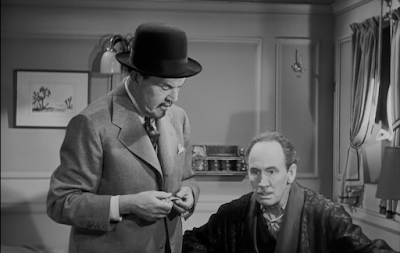
Leonard Mudie appears as Pendleton, an extremely nervous man, with just cause. He is being pursued by a mad killer. On shipboard Pendleton remains in his cabin with a guard posted on the door. The details have yet to be revealed but apparently, the circumstances extend to his wife's first husband.

Lionel Atwill, Charles Middleton, Sen Yung, Claire Du Brey, Don Beddoe, Sidney Toler

Lionel Atwill plays Dr. Sudeman the organizer of the cruise party. It is his first and he fears the bad publicity - murders are not pleasant - will ruin his business. He desires everything to be handled discreetly. 

Charles Middleton and Claire Du Brey play the Watsons. Jimmy rightly calls them "bluenosers." They are killjoys and she claims to be psychic. Just the sort you want along on a cruise.

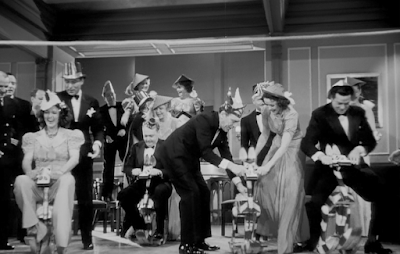
Let the hobby horse races begin!

It's all fun and games until there is another murder or two. One appears to solve the entire case but Lt. Chan is not so easily fooled. The confines of the ship keep the suspects too close for comfort and too convenient for destroying or creating misleading evidence.

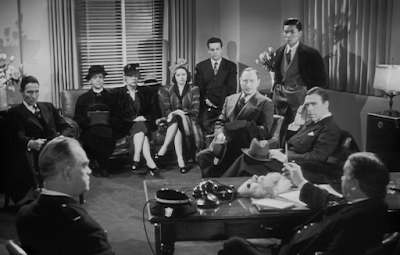
Let the Coroner's Inquest begin!

Cliff Clark, Charles Middleton, Claire Du Brey, Cora Witherspoon, Marjorie Weaver
Robert Lowery, Lionel Atwill, Sen Yung, Leo G. Carroll, Harlan Briggs

Once in San Francisco, the Coroner determines it is quick work to determine the facts and truth of the case, but let's not be too hasty. Lt. Chan has a surprise witness and an even more surprising assistant in bringing the matter to its true successful conclusion. 


Sen Yung, Sidney Toler, Harlan Briggs

Jimmy Chan: "Gee, Pop. You sure figured that one out."


Saturday, January 1, 2022

CAFTAN WOMAN'S CHOICE: ONE FOR JANUARY ON TCM


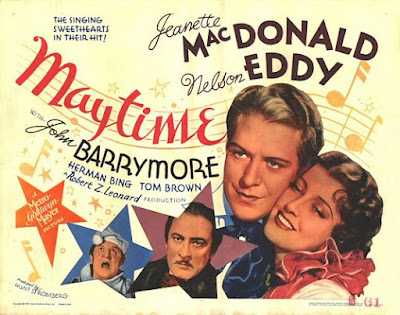
Sitting atop the 1937 movie season box office we find MGMs adaption of Pearl S. Buck's The Good Earth starring Paul Muni and Luise Rainer, MGMs operetta Maytime starring Jeanette MacDonald and Nelson Eddy, and Paramount's Waikiki Wedding with Bing Crosby. It appears that the audience of that year enjoyed epic drama from best-selling novels, and a variety of music and musical performers.

The operetta Maytime premiered on Broadway in 1917 and ran for 492 performances, cementing Sigmund Romberg as a legendary composer in the field. Romberg collaborated with Rida Johnson Young (Little Old New York) on the book and lyrics which was adapted from the 1913 German operetta Like Once in May.

Noel Langley and Frances Marion wrote the screenplay from Claudine West's treatment for the MGM film. The Broadway play was a generational love story starring Peggy Wood (The Sound of Music) and Charles Purcell wherein the children of thwarted lovers themselves find romance. 

The film Maytime is the story of two singers who find romance while outside forces strive to keep them apart. Only one of the Romberg tunes made it to the screen, the hauntingly beautiful Will You Remember (Sweetheart). The rest of the tunes are classical pieces, opera excerpts, and contributions by Herbert Stothart, the film's musical director, and adaptor.

Nelson Eddy 

Nelson Eddy plays Paul Allison, who is studying voice in Paris. Paul and his teacher August Archipenko played by Herman Bing (Dumbo) live a hand-to-mouth existence with Archipenko constantly complaining about the young man's lack of dedication and ambition. Despite his grumbling, Archipenko couldn't be more fond of his young student if he were his own son. Paul is good-hearted and full of youthful joie de vivre. He has nothing in his pocket but lives life as if the world is his.

Jeanette MacDonald and John Barrymore 

Jeanette MacDonald plays Marcia Mornay, a soprano who is reaching the success for which she has striven and worked so very diligently under the tutelage of Nicolai Nazaroff played by John Barrymore (Counsellor-at-Law). Marcia, as she is constantly reminded, owes everything to Nicolai who has taught her to sing, and how to deport herself like a star. Nicolai loves Marcia, perhaps truly but most definitely as a possession. Marcia is grateful, feels her debt keenly, and is trying to convince herself that these emotions will equate or lead to love.

Nelson Eddy, Jeanette MacDonald, Herman Bing

The ebullient Paul falls madly in love with Marcia. Archipenko falls in love with Marcia, whom he sees as the one who will inspire in Paul some of the lacking ambition. Marcia is initially amused by her new suitor and soon learns to return the love that is offered so freely. However, Nicolai is not a power to be ignored and comes between the young lovers.

The passage of time finds both Marcia and Paul enjoying international success and, as will be expected in their world, the star-crossed lover's paths cross when Paul is hired to star opposite Marcia at the Metropolitan Opera. Is this the opportunity for true love to assert itself?

Nelson Eddy and Jeanette MacDonald

Maytime is a beautiful movie with an epic yet intimate romance, and music that will wash over your soul. Directed by Robert Z. Leonard, who directed the top box office duo of Jeanette MacDonald and Nelson Eddy in five films, Maytime is an example of the best of that dream factory of Metro Goldwyn Mayer.

Adrian's sumptuous costumes are time-appropriate and awe-inspiring. Cinematographer Oliver T. Marsh's glorious black and white cinematography bring us a world of sunshine days and dark nights, reminiscent somewhat of his work on The Merry Widow, 1934. His two Oscar nominations were for work in color, and with Nelson and Jeanette for Sweethearts, and Bitter Sweet.

TCM is screening Maytime on Thursday, January 13th at 5:45 PM as the final film in a daytime lineup that appears to be spotlighting movies about opera singers. Look for other MGM stars like Kathryn Grayson, Mario Lanza, and Walter Pidgeon.


Sigmund Romberg
July 29, 1887 - November 9, 1951

Note: MGM also produced a biopic of Sigmund Romberg in 1954 called Deep in My Heart. It may pique your interest in the composer, and your admiration for star Jose Ferrer, along with the opportunity to see many studio stars performing the composer's timeless music. 


Note: Previous titles in the Caftan Woman's Choice series. 


Saturday, December 18, 2021

YOU KNEW MY NAME: THE BOND NOT BOND BLOGATHON - The Persuaders! (Greensleeves), 1971


Gill at Realweegiemidget Reviews and Gabriela at Pale Writer are co-hosting the unique The Bond Not Bond Blogathon. When not attached to Ian Fleming's legendary agent, there are a variety of performances and movies to enjoy with many actors who brought him to life. Click HERE to begin the journey. The DAY 2 lineup. The DAY 3 lineup. BONUS.

Debonair Roger Moore portrayed debonair James Bond from 1973 to 1985. Prior to that, he played the equally heroic, debonair, and charming Beau Maverick on Maverick, 1960-1961, Leslie Charteris's Simon Templar on The Saint, 1962-1969, and the dashing and well-dressed Lord Brett Sinclair on The Persuaders!, 1971-1972. Ah, he had a way about him did the unflappable Roger Moore.


The Persuaders! was an international television hit produced by ITC Entertainment, Sir Lew Grade, and co-star Roger Moore. One season of 24 episodes was released during the 1971-1972 season. The best way to describe the premise of the action/adventure series starring Roger Moore and Tony Curtis as playboy crimefighters Lord Brett Sinclair and Danny (Daniel) Wilde is to watch the impressive and addictive opening HERE with its theme by John Barry.


Episode 4, October 8, 1971

Screenplay by Terence Feely and Directed by David Green


Lord Sinclair's Old School Motto: "Sneaky is best."

The Sinclair family manse has been undergoing unauthorized renovations. Lord Brett becomes aware of this development when an overcharge comes his way. It has been seven years since Lord B. packed up and left the old place in charge of the butler Moorehead (Arthur Brough). What's going on? Brett and Daniel (Danny) use a tunnel that has one end at the local pub and the other into the middle of the estate to surreptitiously enter the home and investigate.


Theatrical agent: "Have you ever played a Lord?"

The home is occupied by Sir John Hassocks (Andrew Keir), Piers Emerson (Tom Adams), and the fetching Melanie Sadler (Rosemarie Nicols). Note: you cannot have an episode of The Persuaders! without a fetching young woman or two.

Papers in the study reveal that this group of usurpers is looking for an actor to play the role of Lord Brett Sinclair. Why, it's a role just made for Lord Brett Sinclair, who hies himself to the preferred theatrical agent of crooks to gain entry to his own home.


Roger Moore, Rosemary Nicols, Arthur Brough, Tom Adams, Andrew Keir

The group hems and haws and makes many cutting remarks about the actor's unsuitability but Moorehead seals the deal because he knows the real thing when it is presented to him. Moorehead also knows, in the best butler tradition, when to keep his mouth shut.


Brett: "Actors are like politicians. We say what we're paid to say."

The phony Brett insists on being told what is going on. The story laid out is that Lord Sinclair, having allowed the Foreign Office to use the mansion for secret talks with Richard Congoto (Cy Grant), the president of an African country and schoolboy chum of Lord Sinclair, said Lord scarpered and left the old F.O. in the lurch. Since President Congoto only agreed to the talks because of the presence of his old pal, a stand-in is required.


Moorehead: "I have noticed a certain undercurrent of intrigue, My Lord."

The actor accepts the story and settles in to studying the role. Brett instructs the already suspicious Moorehead to create a family emergency to get out of the house and to bring a message to his replacement who happens to be Danny aka the American fellow staying at the pub. Moorehead, in the best tradition of butlers, knows when to leak necessary information and advises Lord Brett that the others on the staff are "heeled". In other words, too well-armed for their professed business.


Roger Moore, Tony Curtis

Lord Sinclair is unimpressed with Moorehead's replacement Gregor from Hungary and advises him to wash off excessive aftershave if he wants to keep this choice position. Also, he had better keep his references handy.


Cy Grant, Roger Moore

Brett confides the dangerous and duplicitous situation to his pal Richard. They must be wary and remember their old school motto.


Carmen Munroe, Tony Curtis

Danny cannot fool Carmen the aristocratic daughter of Richard Congoto about his being a butler or Hungarian. He confides the dangerous and duplicitous situation in which they find themselves.


The jig is up!

I ask you, is it proper to conk a Lord on the head when he is dressing for dinner? I ask you, is it proper to toss a Lord in a dungeon in his own home? That's the sort of people we're dealing with!


Cy Grant, Carmen Munroe, Tom Adams, Clifton Jones, Andrew Keir

The sneaks are not politically motivated. It is all about money with them. Including the trusted Dr. Kibu (Clifton Jones), they represent a consortium of nickel miners and Congoto is the president of a nickel-rich country.

The bandits are determined to get more than their fair share of profits. They use threats of blackmail and even murder to reach their goal. These are not nice people. (See above conking on the head of Lord Brett.)


Adventure and action sequence to wrap up the episode in a tidy fashion.


Danny faces off against one of the henchmen with the handy swords littering the old homestead. Lots of fun to be had here, reminiscent of The Great Race.


Brett gets bashed and bopped up and down the stairs and into walls and portraits, and has himself a fine old time.


The aftermath of the fight is that no one, except Melanie, appears to be left unscathed. However, bruised and battered though they may be, our boys wind up the winners!


Cy Grant, Carmen Munroe

Richard: "That's the trouble with these English Country House parties, nothing ever happens."


Rosemary Nicols, Roger Moore

Daniel is banished to the tunnels so Lord Brett can have some quiet time with the fetching Melanie. After all, she did draw the line at murder. Note: the inclusion of a fetching girl in episodes is necessary for the episode ending clinch.


Fashionistas take note:


Saturday, December 11, 2021

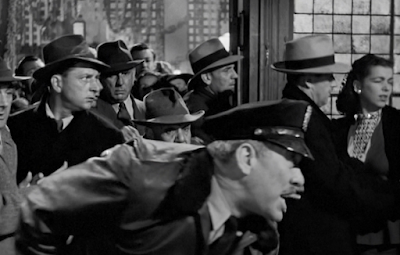
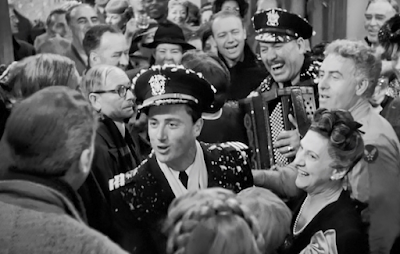
IT'S A WONDERFUL LIFE BLOGATHON - A 75TH ANNIVERSARY CELEBRATION: Ward Bond and Frank Faylen as Bert the cop and Ernie the taxi driver


Ari, The Classic Movie Muse is hosting the It's a Wonderful Life Blogathon, A 75th Anniversary Celebration. Click HERE to access the tributes to Capra's Classic. Assuming you have lost count of the number of times you have watched the movie, spoilers abound.

It's a Wonderful Life is a story of dreams, expectations, and reality, specifically, the expectations and reality of George Bailey played by James Stewart. The rich screenplay by Frances Goodrich and Albert Hackett fills George Bailey's world with nuanced characters we come to know and love. Their time on screen may be limited but their impact is great thanks to the impeccable casting and the cinematic storytelling talent of director Frank Capra.


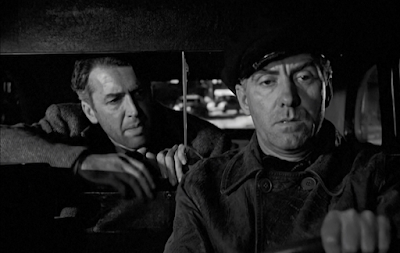
Ward Bond as Bert and Frank Faylen as Ernie

What do we know about the man persistently referred to as "Bert the cop" and his and George's pal "Ernie the taxi driver" as we observe them in Bedford Falls and its dark alter-ego Pottersville? What can we learn from their actions and words, and how others react to them?

It is Christmas Eve, 1945. Heavenly observers note that it is George Bailey's "crucial night." George's family and his friends are praying with all their hearts and souls. You get the feeling that, like George, his friends Bert and Ernie are not used to the supplication, but get right to the point. They understand their friend.

Bert: "He never thinks about himself, God. That's why he's in trouble."

Ernie: "George is a good guy. Give him a break, God."

George Bailey's business problems are extraordinary and complicated. The Bailey Bros. Building and Loan is short $8,000 due to his partner Uncle Billy's forgetfulness and the greedy Mr. Potter who has found and is keeping the money.

In an effort to increase his power over the town of Bedford Falls, Potter played by Lionel Barrymore reminds George that he is worth more ($500 equity in his insurance) dead than alive. The desperate George is at the end of his rope and sees suicide as the only escape from scandal and prison. The AS2 (Angel, second class) Clarence Oddbody assigned to help George must learn the man's history.

We first see Bert and Ernie in conversation with George on the street years before the crisis. The appearance of town flirt Violet Bicks leads to a "men of the world" exchange before they go their separate ways. Bert appears a little older than his pals and has the confidence of a man in his position. Ernie is friendly and humorous --- he puts on his cap for the carriage trade. 

George's first date with Mary Hatch played by Donna Reed ends up with an unexpected swim and change of clothes. When George jokingly says he is not sure if he should return her borrowed robe, Mary says "I'll call the police." George responds that "They're way downtown. They'll be on my side too." Guys!

Ernie becomes a matter of contention in another of Potter's bids to close down the Building and Loan. He mentions how Ernie was turned down for a bank loan but was able to get a mortgage through the Building and Loan because he shoots pool with one of the employees. George vouches for Ernie's character which leads to an impassioned plea to treat the working class with respect. 


It is the marriage of George to Mary Hatch when we next see Ernie. George and Mary stop kissing long enough for George to notice, "Oh look,  there's somebody driving this cab." 

Ernie: Referring to a bottle of champagne, "Bert the cop (Bert must be a popular name in Bedford Falls.) sent this over. He said to float away to Happy Land on the bubbles."  George responds: "Oh look at this. Old Bert. Champagne, huh?

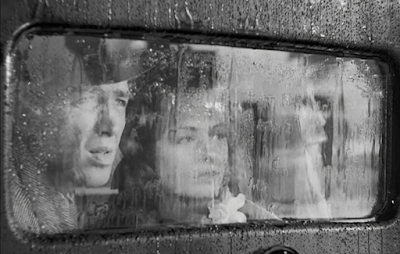
Ernie is driving the couple to the train to begin their honeymoon on this rainy day when a run on the bank, and machinations from Potter force George and Mary to use their own honeymoon savings to stave off the closure of the Building and Loan. Ernie escorts and stays near Mary, perhaps ready to help if needed. 

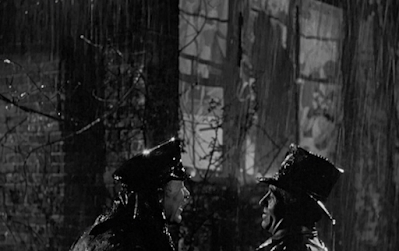
Mary has set up an old abandoned house which means a lot to her as their honeymoon suite. When George asks how she managed it, he gets a kiss as an answer. We can assume that family and friends had something to do with it, especially friends like Bert and Ernie. Bert has finagled posters from some company or other to block the windows on what turned out to be an even rainier night. "What we want is beautiful places, romantic places, places George wants to go." These guys know and understand each other. 


Ernie acts as a butler to the honeymooners and then joins Bert in serenading the couple with I Love You Truly. Ernie kisses Bert on the forehead at the song's conclusion and Bert smashes Ernie's hat before they go their separate ways. The friendships are long standing and filled with ease. 

We next see George fighting WW2 on the homefront. Bert the cop was wounded in North Africa and got the Silver Star. Ernie the taxi driver parachuted into France. George's kid brother Harry Bailey played by Todd Karns is awarded the Congressional Medal of Honor. Ernie jokes with George about missing that headline in the local paper to remark on the weather report.


It is the Christmas Eve of George's crisis and his guardian angel Clarence arranges for George to see what the world would be like if he had never been born. Bedford Falls is now Pottersville, a wide-open town.

Ernie doesn't know George despite George's belief that they are still pals and he has been to Ernie's house a hundred times. George mentions Ernie's wife and kid to solidify the truth of what he is saying only to hear Ernie say that his wife left two years ago and took the kid with her.

Worried about the manic stranger he has picked up, Ernie signals to Bert who follows to the abandoned house George still thinks of as home. George is a stranger to Bert who tries to calm him with "Be a good kid" before pulling a gun to strike him. Clarence engineers George's escape and unseen forces help Clarence to disappear at the moment Bert tries to cuff him.


George accosts the unmarried, lonely, and frightened Mary Hatch shouting about their family and their love. The loss of Mary is too much for George. He begins to run as far and as fast as he can from the nightmare that is Pottersville. This time Bert draws his gun to shoot at the crazed George. When he reaches the bridge where he first met Clarence, George prays the prayer of the sincere that he get back to his wife and kids no matter what happens.

Bert has been looking for George, finds his abandoned car and tracks him to the bridge. Afraid it is still the Pottersville Bert, George threatens to hit the cop. "What in the Sam Hill are you yelling about, George?"  When Bert recognizes him, George knows his prayer has been answered and he is back in his world. 

At home, there is the bank examiner, reporters, and a man from the district attorney's office with an arrest warrant. There is also Mary who discovered what was happening from Uncle Billy and asked friends for help.


Help came in the form of friends contributing anything they could to help George. Ernie reads a telegram from Sam Wainwright, the richest of their circle of friends, who authorizes his office to give George up to $25,000. Bert has escorted medal winner Harry from the airport. Harry had left an official banquet and flew through a blizzard to be with his brother George, "the richest man in town." The happy crowd sings Auld Lange Syne with Bert on the accordion. Oh, and Clarence is no longer an Angel 2nd Class.

We learn a lot about Bert and Ernie through their actions with George and we learn a lot about George through how he is with his friends. The friendship is deep and they are there for each other. It's a Wonderful Life is a movie of rich and layered characters.


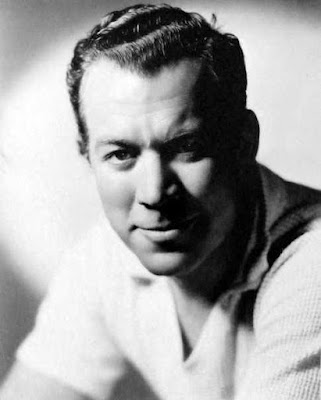
WARD BOND
April 9, 1903 - November 5, 1960

Nebraska-born Bond was attending the University of Southern California when he and fellow footballer John Wayne found work at Fox Studios as prop men and extras in the John Ford picture Salute, 1929. Unexpectedly, his life's path was set on a show business career with  262 film roles, big and small following and in each and every one, Bond was never less than believable. 

Bond's 1930s output includes the bus driver in It Happened One Night, the doorman in Dead End, a Union officer in Gone with the Wind, "Jack Cass" in Young Mr. Lincoln, and boisterous Adam in Drums Along the Mohawk

The 1940s would find Bond in fine form as John L. Sullivan in the biopic Gentleman Jim, a Nazi in The Mortal Storm, the penitent "Yank" in The Long Voyage Home, peacekeeper Tom Polhaus in The Maltese Falcon, Moose Molloy in The Falcon Takes Over, sympathetic Al in A Guy Named Joe, duplicitous Judge Garvey in Tall in the Saddle, the murderer Honey Bragg in Canyon Passage, Morgan Earp in My Darling Clementine, brave and confident Sgt. Major O'Rourke in Fort Apache. The finest of these roles are for director John Ford who frequently used the actor as a favourite "whipping boy." Bond was thick-skinned enough to take it and prove his mettle as a screen actor.

The 1950s would bring Bond the opportunity to play/spoof Ford as director "John Dodge" in The Wings of Eagles. He played the title character in Wagon Master, the trustworthy Rev. Clayton in The Searchers, Buck in 3 Godfathers, and the amusing Father Lonergan in The Quiet Man - all for Ford. Other outstanding rules include the reactionary John McIvers in Johnny Guitar and the grieving Walter Brent in On Dangerous Ground - both for Nicholas Ray. Note: Ida Lupino also directed portions of On Dangerous Ground.


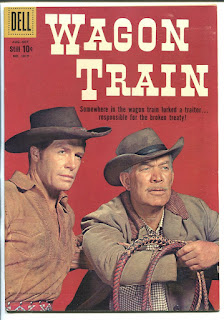
Ward Bond would become more than a "that guy" character actor with the role of Major Seth Adams in the television classic Wagon Train in 1957. To this day, that character and program is an important and sometimes first association for many fans. Ward Bond's last film role was, perhaps fittingly, as John Wayne's friend in Rio Bravo, 1959.


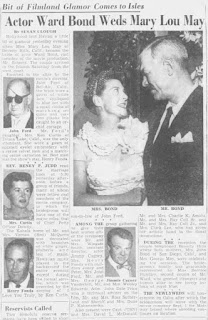
Ward Bond was married twice and divorced once. A park was named in the actor's honour in his hometown of Benkleman, Nebraska. He was inducted into the Hall of Great Western Performers of the National Cowboy and Western Heritage Museum in 2001. A Star on the Walk of Fame at 6933 Hollywood Boulevard was established in 1960.


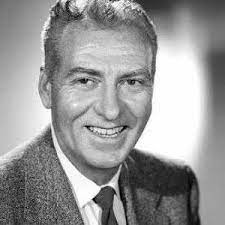
FRANK FAYLEN
December 8, 1905 - August 2, 1985

Frank Faylen's show business fate was preordained as he was born in a trunk and joined his Vaudevillian parents on stage. A clown and song-and-dance man, Frank settled into steady work as a character actor in Hollywood.

Frank hopscotched through the studios often in uncredited bits as cops, cabbies, reporters, etc. plus some welcome larger supporting roles, and he always left an impression on audiences. Watching your favourite 1930s movies, look for Frank in Marked Woman, San Quentin, They Won't Forget, Idiot's Delight, Five Came Back, Invisible Stripes, and It's a Wonderful World. Personally, I would have liked Warner Brothers to have cast Frank as Paul Drake if they had taken the Perry Mason series to heart as Perry Mason instead of trying to turn him into a Nick Charles lite.

The 1940s would still see Frank in the uncredited category, but observant movie fans (my late dad) would be putting the name with the face in They Drive by Night, No Time for Comedy, City for Conquest, Margie, The Reluctant Dragon, Sergeant York, Yankee Doodle Dandy, Wake Island, etc.

Frank would leave the uncredited bits behind in the latter part of the 1940s. Check out Two Years Before the Mast, Road to Rio, Blood on the Moon, the psychotic Whitey in Whispering Smith, and his nasty turn as "Bim" Nolan in The Lost Weekend

The 1950s would prove a golden time for Frank as a movie character actor in a variety of films including Francis, Detective Story, The Sniper, and top-notch westerns Gunfight at the O.K. Corral and as the brave Cass in Hangman's Knot. Versatile Frank was also featured in the comedy-musical western spoof Red Garters.

Dwayne Hickman, Bob Denver, Steve Franken
Sheila James Kuehl, Florida Friebus, Frank Faylen
The Many Loves of Dobie Gillis

Television would make Frank Faylen even more familiar to audiences as The Many Loves of Dobie Gillis hit the home screen in 1959 and ran until 1963. Frank and Florida Friebus played Herb and Winifred, the parents of Dwayne Hickman's girl-crazy Dobie. The antics of the teen characters, his own son in particular would drive grocer Herb to shout to the Heavens, "I gotta kill that boy!" Check out "Dobie" on YouTube or DVD if you haven't yet seen the program. It is a gem.

Frank's last film role was in Funny Girl, 1968 but you can still spot him pre-retirement on Classic TV in That Girl as Ted Bessell's dad and the 1977 reunion program, Whatever Happened to Dobie Gillis?

Carol and Frank at a theatre opening in 1952

Frank and actress Carol Hughes of Three Men on a Horse, Under Western Stars, Flash Gordon Conquers the Universe, etc. married in 1928. The couple appeared as a double act on stage as well as raising two daughters, Carol and Kay in a marriage that lasted until Frank's passing in 1985.


Of note:

Beyond It's a Wonderful Life, revered character actors Ward Bond and Frank Faylen crossed paths in Gone with the Wind, Sergeant York, The Grapes of Wrath, A Guy Named Joe, City for Conquest, Slightly Dangerous, and Waterfront


Saturday, December 4, 2021

WHAT A CHARACTER! Blogathon: Kathleen Harrison


Paula's Cinema Club, Outspoken & Freckled, and Once Upon A Screen are hosting their annual What a Character! Blogathon on December 4th. It is the 10th anniversary of this highly anticipated event! Thank you, Paula, Kellee, and Aurora.

Kathleen Harrison
February 23, 1892 - December 7, 1995

"Go out into the Old Kent Road and just listen to the women talking." This was the advice from George Bernard Shaw to Royal Academy of Dramatic Arts student Kathleen Harrison rehearsing the role of Eliza Doolittle in the author's Pygmalion. It would be the making of her career, but the actress would not see overnight success.

Kathleen Harrison
RADA student

Born in Lancashire and raised in London by her working-class family, young Kathleen aspired to the theatre and while attending RADA in 1914 - 1915 was the recipient of the Du Maurier Bronze Medal. Love entered the actress's life and she was married to John Back from 1916 to his passing in 1960. The family would grow with two sons and a daughter. Her husband's work took the family to Argentina and Spain. A return to England in the 1920s opened up avenues for Kathleen's career. 

Kathleen's movie career during the 1930s see-sawed between featured roles as in The Ghoul or The Man from Toronto both 1933, and those uncredited in nature as in Inside the Room, 1935.

Robert Montgomery as the psychotic Danny
Kathleen Harrison as Mrs. Terence in Night Must Fall

Emlyn Williams' 1935 stage success Night Must Fall featured Kathleen in the role of the housekeeper Mrs. Terence and she recreated the role in the 1937 film produced by MGM. Dame May Whitty was Oscar-nominated for recreating her role as Mrs. Bramson.

Kathleen Harrison and Kay Walsh in In Which We Serve
A telegram from the war office.

More bits and uncredited roles would follow Night Must Fall, but the always notable actress would garner more memorable performances and films throughout the years including The Ghost Train, and Major Barbara in 1941. In Which We Serve, the WW2 morale booster written by and starring Noel Coward, who co-directed with David Lean gave Kathleen the plum role of Mrs. Blake, the mother to seaman "Shorty" played by John Mills.

Jimmy Hanley, Susan Shaw, Kathleen Harrison, Jack Warner, Petula Clark, Jane Hylton
Here Come the Huggetts

In 1947 we go to a Holiday Camp with the Huggetts. Joe and Ethel Huggett played by Jack Warner and Kathleen Harrison take their family away for the summer. The popularity of the family with audiences would lead to sequels and some tweaking of the family as originally met. The follow-up was Here Come the Huggetts, 1948, Vote for Huggett, and The Huggetts Abroad, 1949. Meet the Huggetts was a popular radio program starring Warner and Harrison which ran from 1951 to 1963.

Kathleen Harrison as Violet
The Winslow Boy

Terrence Rattigan's play The Winslow Boy, based on an Edwardian court case opened in 1946 and the 1948 film version featured two of the original cast members, Kathleen Harrison as the maid Violet and Mona Washbourne as Miss Barnes, a journalist of the sob sister sort.

The film does not bring us to the all-important conclusion of the trial. Instead, we are treated to Kathleen as the loyal Violet emotionally relating all to the Winslow family. The performance and scene are a genuine cathartic treat.

Kathleen Harrison, Yvonne Mitchell, Joan Collins
Turn the Key Softly

Turn the Key Softly
, 1953 finds Kathleen in the murky world of film noir in a film based on a novel by John Brophy which follows three women on their first day of freedom after being released from Holloway Prison. Yvonne Mitchell plays Monica who was led into crime by her boyfriend. Joan Collins plays prostitute Stella. Kathleen Harrison is a poverty-stricken shoplifter, Granny Quilliam.
Critical reception for the honesty in the film, and the performances of our trio of ex-convicts was laudatory. 

"Kathleen Harrison contributes the film's top portrayal. She makes the loneliness of the poor and unwanted strikingly real."
- New York Times

Robert Flemying, Kathleen Harrison, Dirk Bogarde
Cast a Dark Shadow

Cast a Dark Shadow
, 1955 is another film noir starring Dirk Bogarde as a charming psychopath who kills his older wife played by Mona Washbourne (see The Winslow Boy) for her money. He even goes so far as to cheat the maid Emmy played by Kathleen out of her paltry bequest.

Estelle Winwood, Sybil Thorndyke, Kathleen Harrison
Alive and Kicking, 1958

Here's another trio of actresses with whom to reckon, Estelle Winwood, Dame Sybil Thorndyke, and Kathleen Harrison in Alive and Kicking, 1958 as three retirees who run away from a senior's home. Go, girls!

Kathleen Harrison told a reporter that her favourite author was Charles Dickens and she certainly made her mark in filmizations of his work.


Kathleen as the nasty Mrs. Sowerberry in Oliver Twist, 1948
Directed by David Lean


Kathleen as the gullible Rachel Wardle in The Pickwick Papers, 1952
Directed by Noel Langley


Kathleen as befuddled charlady Mrs. Dilber in A Christmas Carol, 1951
Directed by Brian Desmond Hurst

The crown jewel of these performances may well be Mrs. Dilber in the 1951 version of A Christmas Carol aka Scrooge. Second-billed behind Alastair Sim, Kathleen's talent at characterization and Noel Langley's script make charwoman Mrs. Dilber a memorable personality that not even Dickens himself envisioned. She is a vibrant personality with whom we share the experience of life in Scrooge's orbit. 

On television, Kathleen played the aptly-named Mrs. Prigg in a 1964 production of Martin Chuzzlewitt, and the well-intentioned Henrietty Boffin in Our Mutual Friend in 1976.


The 1966-1967 television series Mrs. Thursday, saw Kathleen as a charlady whose late employer left her his fortune and company. Quite a step up that came with quite a few problems. Created by playwright Lord Ted Willis with Kathleen Harrison in mind, the program was a popular comedy-drama that explored the good and the ill that came with Alice Thursday's luck. The show ran for three series of 38 episodes, and a few of them can be found on YouTube. The working actress was now a star thanks to the television success.

"Because of my popularity as Mrs. Thursday, I can't go shopping anymore. It's embarrassing to be recognized and stopped all the time."
- Kathleen Harrison quote on the IMDb

Kathleen's final television appearance was in the Danger UXB episode The Quiet Weekend, 1979. Her final film role was in The London Connection, 1979 where she is billed as "Elderly Lady."

We are aware that actors do not have ages, per se, but age ranges. However, even character actresses must consider age when wondering whether producers and directors are considering stamina in their hiring process. Kathleen would knock five or six years off her age throughout her working life but returned to her original birthdate when it came time to receive the 100th birthday message from Queen Elizabeth II in 1992.

According to a Jim McPherson report in The Toronto Sun dated 1989, 91-year-old Kathleen was living with a son in London and "hale and hearty." Cheering news for all of us fans who wished her well all the days of her 103 years.


PERRY MASON: THE CASE OF THE SAUSALITO SUNRISE

Terence Towles Canote at A Shroud of Thoughts is hosting The 8th Annual Favourite TV Show Episode Blogathon . The popular blogathon is runn...